Top 10 Ways to Secure Standing Giant Flowers in Busy Areas?

Time:2026-09-13 Author:Sophia
0%

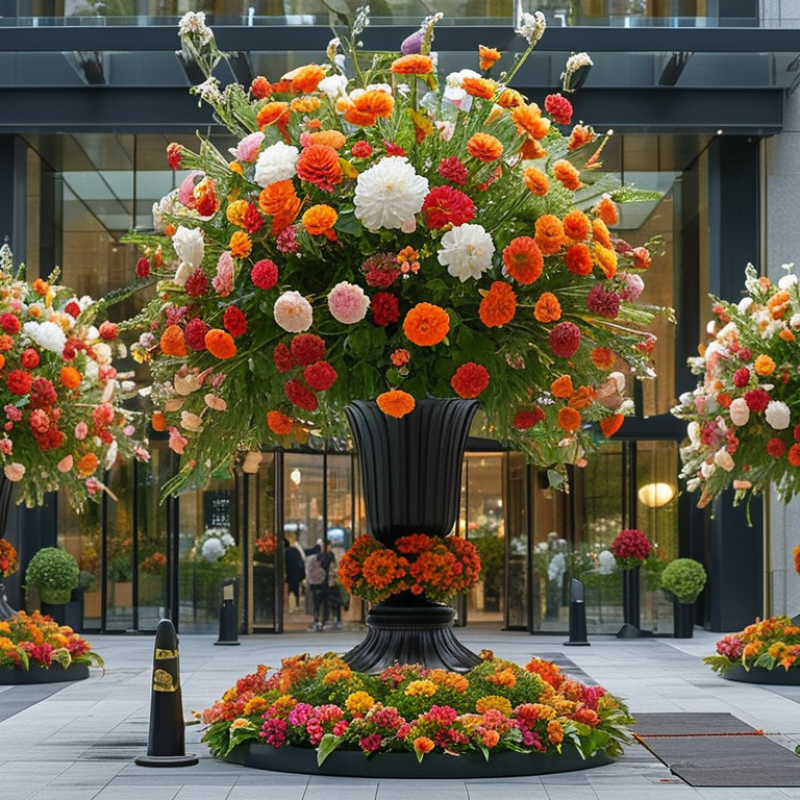
Standing giant flowers create memorable entrances, photo points, and cheerful displays. Yet their height, wide petals, and lightweight materials can create stability concerns in crowded venues. Learning How to secure standing giant flowers in high-traffic areas? requires more than placing a heavy base nearby. It involves practical planning, suitable hardware, careful positioning, and regular checks.

This guide presents ten reliable methods used by event stylists, retail teams, and exhibition professionals. Each method considers floor conditions, pedestrian movement, flower height, base weight, and the possibility of accidental contact. Weighted plinths, concealed sandbags, non-slip pads, anchor straps, and discreet barriers can work together without damaging the display. Clear access routes also matter. A beautiful arrangement should never narrow an aisle or block an exit.

Small details protect the whole installation.

Experience shows that stability changes during the day. A crowded entrance may produce repeated bumps, while air conditioning can move lightweight petals and stems. Staff should inspect the base, fasteners, and surrounding floor before opening, during busy periods, and after relocation. Manufacturer guidance remains important, especially for oversized frames or modular flower walls. Even careful teams sometimes underestimate leverage from a tall stem. That mistake deserves attention, not excuses. The recommendations ahead focus on dependable, realistic practices that improve safety, preserve visual appeal, and support a professional visitor experience. Conditions differ, so each method should be tested on-site before guests arrive.
Top 10 Ways to Secure Standing Giant Flowers in Busy Areas?

Map Crowd Flow Around ADA’s 36-Inch Minimum Clear Route

Top 10 Ways to Secure Standing Giant Flowers in Busy Areas

Map Crowd Flow Around ADA’s 36-Inch Minimum Clear Route

A standing giant flower should never narrow an accessible path. The 2010 ADA Standards require at least 36 inches of clear route width in most locations. Measure between the widest parts of the base, leaves, barriers, and nearby furniture. Do not measure only the stem. A broad planter can quietly reduce clearance.

Start with a simple crowd-flow map. Mark entrances, exits, queues, elevator approaches, fire equipment, and turning spaces. The U.S. Access Board recommends maintaining accessible routes without protruding hazards. Event safety guidance also treats bottlenecks as key crowd-risk points. Place floral displays outside the main walking line, not beside a door where people naturally pause.

Use weighted bases, concealed ballast, and secondary tethers where permitted. Test each arrangement with a wheelchair, stroller, and mobility cane. A 36-inch route may still feel unsafe when crowds move quickly. Leave extra space near corners and queue releases. Keep loose petals, irrigation tubes, and decorative cables away from feet.

The National Fire Protection Association identifies blocked egress as a serious life-safety concern. That makes daily inspection essential. Check for leaning stems, shifted bases, wet flooring, and crowd-created shortcuts. I have seen a stable display become unstable after guests repeatedly touched it. Our placement plans are not perfect. Recheck them during peak periods, and revise the map when real movement differs from the drawing.

Top 10 Ways to Secure Standing Giant Flowers in Busy Areas

Map crowd flow around the ADA’s 36-inch minimum clear route. The chart compares the applicable accessible-route or maneuvering-space benchmark for each placement practice.

Use a continuous 36-inch minimum clear width for an accessible route. Where people need to pass or turn, plan for a 60-inch clear space. Keep weighted bases, anchors, signs, queue lines, and decorative elements outside the designated route.

  1. Survey the primary pedestrian route before installation.
  2. Keep flower stems and display parts outside the clear path.
  3. Mark the 36-inch route boundary on the floor plan.
  4. Place weighted bases beyond the accessible route.
  5. Provide a 60-inch passing area where two-way flow is expected.
  6. Provide a 60-inch turning area near major displays.
  7. Keep queue lines from narrowing the accessible route.
  8. Secure tall stems with concealed ballast or secondary restraints.
  9. Check pinch points near doors, corners, and furniture.
  10. Reinspect the route after crowd levels and displays change.

Dimensions are based on accessible-route and wheelchair-space criteria in the 2010 ADA Standards for Accessible Design.

Calculate Wind Loads Using ASCE 7 Site Wind-Speed Data

Standing giant flowers can become dangerous sails in crowded plazas, event entrances, and pedestrian corridors. ASCE 7 site wind-speed data provides the starting point for a defensible design. Identify the project location and select the correct basic wind speed from the applicable edition and local requirements. Do not use a regional average.

Convert that speed into velocity pressure with exposure category, height, topographic effects, and directionality factors. A practical screening equation is qz = 0.00256 Kz Kzt Kd V² in U.S. customary units. Then estimate force from pressure, gust effects, force coefficient, and projected flower area. Include the stem, petals, signage, and base. A licensed structural professional should review unusual shapes or occupied sites.

Use wide, weighted bases, concealed ground anchors, paired guy lines, and secondary restraints. Keep ballast low and distribute it across the footprint. Avoid placing flowers beside vehicle lanes or narrow exits. Inspect bolts, welds, ropes, and anchor points before opening. Check them again after strong gusts. Wind can loosen hardware gradually.

My first estimate often misses turbulence near buildings. That is a useful warning. ASCE 7 calculations are not a substitute for site observation. Record the assumed wind speed, exposure, soil condition, ballast weight, and inspection schedule. If the forecast exceeds the design operating limit, remove the installation or lower it. A beautiful display should not depend on optimistic assumptions.

Top 10 Ways to Secure Standing Giant Flowers in Busy Areas? — Calculate Wind Loads Using ASCE 7 Site Wind-Speed Data
No. Security Method Wind-Load Input Recommended Application Design and Installation Guidance Inspection Trigger
1 Use a Ballasted Base 90–115 mph
Approximate velocity pressure at 10 ft above ground: 20.7–33.9 psf
Select a wide, low-profile base when the display cannot be anchored to the pavement or structure. Position ballast directly over the base footprint to resist sliding and overturning. Calculate the required resisting moment from the flower’s projected area, center of pressure, and total height. Include the weight of the base, ballast, stem, and decorative components. After relocation, strong wind, or visible base movement.
2 Anchor to a Structural Surface 100–130 mph
Approximate velocity pressure at 10 ft above ground: 25.6–43.3 psf
Use mechanical anchors or an engineered connection where concrete, masonry, or a verified structural frame is available. Confirm substrate thickness, edge distances, anchor spacing, pull-out capacity, and shear capacity. Do not anchor only to thin paving slabs, loose pavers, or nonstructural finishes. Whenever an anchor is loose, cracked, corroded, or damaged.
3 Install Ground Stakes or Helical Anchors 90–120 mph
Approximate velocity pressure at 10 ft above ground: 20.7–36.9 psf
Use only in verified soil, landscaped ground, or other approved areas where underground utilities and buried structures have been located. Base the number, embedment depth, and spacing on soil type, frost conditions, uplift, overturning, and local geotechnical capacity. Stake heads should be covered or located outside pedestrian paths. After heavy rain, freeze-thaw cycles, soil settlement, or a change in display position.
4 Add a Low-Level Outrigger Frame Reduce overturning
A wider support footprint increases the resisting moment without substantially increasing display height.
Attach four-way outriggers or a cross-shaped frame to the lower stem or base where floor space permits. Keep the frame low and outside the centerline of the stem. Protect corners and edges with high-visibility markings and maintain required pedestrian clearance. Daily in high-traffic areas and after any impact from carts, equipment, or pedestrians.
5 Use a Flexible, Segmented Stem Lower peak force
Flexibility can reduce abrupt load transfer, but it does not replace a stable base.
Use engineered joints or compliant sections that allow controlled movement while preventing excessive sway or permanent deformation. Check fatigue, joint rotation, fastener loosening, and clearance from people, doors, vehicles, and adjacent displays. Avoid uncontrolled bending near the base. If the stem remains bent, makes unusual noise, or shows joint displacement.
6 Reduce or Vent the Flower Head Lower projected area
Openings can reduce the effective solid area used in force calculations.
Use perforated petals, spaced elements, or removable sections in locations exposed to frequent gusts. Measure the effective projected area and use a conservative force coefficient. Small parts must remain securely attached and must not create falling-object hazards. When petals, panels, or decorative elements are missing or loosened.
7 Lower the Center of Gravity Shorter overturning arm
Lowering heavy components decreases the moment created by wind pressure.
Place heavier approved components near the base and avoid adding unnecessary weight high on the stem or flower head. Verify that added mass does not overload the floor, pavement, anchors, or base connection. Recalculate handling loads and the center of gravity after every design change. After adding signage, lighting, planters, or other attachments.
8 Create a Dedicated Wind-Response Plan Wind threshold
Establish a site-specific removal or shutdown threshold below the governing design condition.
Define who monitors forecasts, who authorizes closure, where the display will be stored, and how the area will be isolated. Use the applicable ASCE 7 basic wind speed for the site and the authority having jurisdiction. Forecast alerts are operational controls, not substitutes for structural design. Before seasonal installation and whenever the forecast changes materially.
9 Protect the Pedestrian Clearance Zone Secondary hazard control
Prevent wind-driven movement from entering travel paths, exits, ramps, or vehicle lanes.
Place bases outside required accessible routes and use barriers, edge protection, or controlled standoff distances where appropriate. Keep exits, fire access, ramps, and accessible routes unobstructed. Eliminate trip hazards from ballast, tie-downs, cables, and protruding hardware. At opening, after crowd movement, and after any relocation.
10 Document and Recheck the Full Assembly Traceable safety control
Record site wind speed, exposure, dimensions, mass, anchors, and inspection results.
Maintain an installation record for each display location, including photographs and the approved securing configuration. Recalculate when height, projected area, location, base, attachment method, or surrounding exposure changes. Have final structural decisions reviewed by a qualified design professional where required. At every installation, relocation, modification, and post-storm inspection.
Wind-pressure reference: The screening values above use the simplified relationship
q = 0.00256 × V²
where q is velocity pressure in psf and V is wind speed in mph. Actual ASCE 7 design pressure also depends on the applicable edition, risk category, wind-speed map, exposure category, height, topography, gust factor, enclosure classification, force coefficients, directionality, and load combinations. Confirm the site-specific wind speed and final anchorage design with the authority having jurisdiction or a qualified structural professional.

Size Ballast for Overturning Resistance with a 1.5 Safety Factor

Top 10 Ways to Secure Standing Giant Flowers in Busy Areas

Size Ballast for Overturning Resistance with a 1.5 Safety Factor

A giant flower behaves like a sail in crowded outdoor spaces. Size ballast against wind, not decoration weight. ASCE 7-22 uses wind-speed-based pressure calculations for temporary structures. At 27 m/s wind, basic pressure is about 446 pascals before exposure and shape adjustments. A 3-meter flower with 1.2 square meters of projected area could receive roughly 535 newtons of force. Its overturning moment may approach 1.6 kilonewton-metres. These figures are illustrative, not a site approval.

Use the equation: required ballast moment equals 1.5 times the overturning moment. If ballast acts 0.6 meters from the tipping edge, 4 kilonewtons of resisting force may be needed. That equals approximately 408 kilograms under standard gravity. Place weight low, wide, and evenly distributed. Lock each base against sliding. Keep ballast concealed, but inspect it openly before visitors arrive. Busy walkways create additional risks from contact, vibration, and uneven paving.

Leave margin.

The International Building Code and ASCE guidance require site-specific wind, exposure, and stability considerations. A safety factor alone cannot correct a narrow base or weak connection. I have seen attractive installations fail because the calculation ignored cable angles and surface friction. That mistake is easy to repeat. Recheck the design after rain, relocation, or partial disassembly. A competent structural professional should verify the final arrangement, especially where children, queues, or emergency routes are nearby.

Keep Emergency Egress Clear Under NFPA 101 Requirements

Top 10 Ways to Secure Standing Giant Flowers in Busy Areas

Standing giant flowers can decorate lobbies, corridors, and event spaces, but they must never narrow an emergency exit route. NFPA 101 emphasizes clear, usable means of egress, while local authorities may apply additional requirements. Start with a site review by a qualified life-safety professional. Check exit doors, stairs, accessible paths, alarm equipment, and turning areas. Use weighted bases, hidden tethers, anti-tip plates, and low-profile supports. Place displays outside the required egress width, not beside door swings. Avoid loose cables. Secure every stem and pot against contact, vibration, and accidental pushing.

Tips: Mark the approved footprint on the floor. Measure it during peak occupancy. Ask staff to walk the route quickly. If a flower blocks sightlines, move it. Keep decorations away from sprinklers, exit signs, and fire equipment. Inspect attachments at opening time and after crowded events. Temporary displays still require control.

A simple barrier can prevent contact, but it must not become another obstruction. Choose stable, visible materials with rounded edges. Never depend on a decorative rope alone. Staff should know who can remove the display immediately during an evacuation. Written inspection records improve accountability and reveal recurring problems. In practice, rushed installations cause many failures. I have also seen attractive layouts become unsafe after furniture shifts. Recheck the space whenever attendance, staging, or floor conditions change. NFPA 101 is not a design shortcut; confirm the final arrangement with the responsible authority.

Inspect Bases, Anchors, and Fasteners Under OSHA 1910.22 Criteria

Standing giant flowers need more than attractive petals and a wide base. OSHA 1910.22 emphasizes clean, orderly, dry walking-working surfaces that remain free from hazards. Inspect each base before opening. Look for cracks, bent plates, rust, loose welds, and standing water. Measure twice. A flower can appear stable while its lower frame is already shifting.

Secure the display with suitable anchors for the floor or ground condition. Confirm that anchors are fully seated and cannot pull out under ordinary contact. Tighten fasteners evenly, using washers and locking hardware where appropriate. Check every nut by hand and with the correct tool. Do not guess. Keep anchor heads, brackets, and cables outside pedestrian paths. Cover unavoidable edges without creating a raised trip point. Place barriers where crowds may push, queue, or turn suddenly.

Inspect after setup, during busy periods, and after impact, rain, or strong wind. OSHA 1910.22 requires regular inspection and prompt correction of hazardous conditions. Record the inspection time, observed defects, repairs, and the person responsible. A second worker should gently test for rocking from several directions. Small movement matters. If the substrate is weak or the load is uncertain, seek evaluation from a qualified professional. I have found that hurried checks often miss loosened rear fasteners. That weakness deserves attention, even when the display still looks perfect.

FAQS

How can giant flowers avoid blocking emergency exit routes?

Keep every display outside the required exit width and away from door swings. Measure the route during peak occupancy. Clear space matters.

What should be checked before installing a standing giant flower?

Review exit doors, stairs, accessible paths, alarm equipment, sprinklers, and turning areas. Confirm the final placement with a qualified safety professional.

How should a giant flower be secured?

Use weighted bases, anti-tip plates, hidden tethers, and suitable anchors. Secure each stem and pot against contact, vibration, and accidental pushing.

What defects can appear in a flower base?

Inspect for cracks, bent plates, rust, loose welds, and standing water. A wide base can still shift underneath.

How should anchors and fasteners be inspected?

Confirm anchors are fully seated and outside walking paths. Tighten fasteners evenly with suitable washers and locking hardware. Do not guess.

Can barriers make a display safer?

Yes, but barriers must not create another obstruction. Choose visible, stable materials with rounded edges. Decorative ropes alone are unreliable.

When should staff inspect the display?

Inspect before opening, during busy periods, and after impact, rain, strong wind, or furniture movement. Recheck the area when conditions change.

What should inspection records include?

Record the inspection time, defects, repairs, and responsible person. A second worker should gently test movement from several directions.

What should happen if the flower blocks visibility?

Move it immediately. A beautiful arrangement is not worth hiding an exit sign or emergency path.

What if the floor or ground feels weak?

Stop installation and seek professional evaluation. Small movement matters, even when the display looks perfect. We sometimes miss rear fasteners.

Conclusion

How to secure standing giant flowers in high-traffic areas? Begin by studying pedestrian movement and positioning each display outside the ADA-required 36-inch minimum clear route. Consider entrances, exits, turning spaces, and areas where crowds may gather. Next, evaluate local wind conditions using applicable ASCE 7 site wind-speed data, then calculate the likely wind load on the flower structure. The base should be designed with sufficient ballast or anchoring to resist sliding and overturning, using at least a 1.5 safety factor.

Safety planning should also preserve emergency egress routes in accordance with NFPA 101 requirements. Keep aisles, exit access, and doorways unobstructed, even during busy periods or temporary events. Finally, establish a regular inspection routine based on OSHA 1910.22 criteria. Check bases for shifting, anchors for looseness, fasteners for corrosion or damage, and structural connections for wear. Prompt repairs and documented inspections help keep the displays stable, accessible, and safe for visitors and staff.

Sophia

Sophia

Sophia is a dedicated marketing professional with an exceptional depth of knowledge about her company's products and services. With a keen understanding of market trends and customer needs, she crafts insightful blog posts that not only inform but also engage readers, enriching the company’s online......